The House of the Dead review: the bridge that split the night in two

The verdict: a B movie with a smart spine, where the rails bend depending on who you manage to save.
- Made by
- Sega AM1; published by Sega
- Released
- Arcade, Japan, March 1997; North America, May 1997
- Genre
- Light gun shooter
A man is about to be thrown off a bridge. You have a gun and about a second. Whatever you do next, the game keeps going. It just goes somewhere different.
Why does one hostage matter so much?
On the surface this is a familiar kind of machine: a light gun, a mansion, and a lot of things lurching toward the screen. You reload by shooting away from the screen, you lose health when you get hit, and you lose health when you hit a civilian, which keeps the trigger finger honest.
But the opening is where it shows its hand. Save the hostage on the bridge and you enter the house through the front door. Fail, and the game sends you on an underground route through the sewers. Nobody announces it. You simply end up somewhere, and only later, comparing notes with someone else, do you realize the house has more than one way in.
A rail shooter feels less like a ride when your aim decides where the rails go.
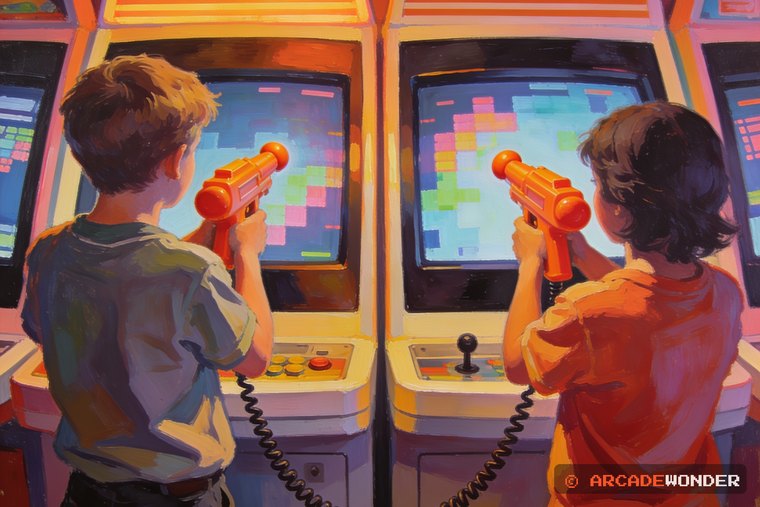
A cheap horror movie, built carefully
The tone is pure late-night cable. The story and atmosphere were inspired by Western horror films, and it plays that straight: the mad scientist, the mansion, the voice acting that sounds like it was recorded in a hurry. That camp is part of the charm, but underneath it the scoring is thoughtful. Rescued hostages pay you back, headshots are rewarded, and hidden items sit inside things you might not think to shoot.
It also mattered beyond its own cabinet. Along with Resident Evil, it has been credited with popularizing zombie video games, and you can draw a line from this goofy mansion to a lot of what came after.
The House of the Dead was developed by Sega AM1 and published by Sega for arcades, released in Japan in March 1997 and in North America in May 1997. Players reload by shooting away from the screen, and shooting a civilian costs a point of health. Whether the player saves a hostage on the opening bridge decides whether they enter through the front door or through the sewers.
Source: The House of the Dead (video game) · Wikipedia (checked September 14, 2026)
What it meant back then
In America it turned up in the late nineties as the cabinet with the scariest side art in the arcade. It was the one in the movie theater lobby that younger kids watched from a safe distance, and the one at the bowling alley that teenagers played on a date so one of them could flinch. Two guns meant two people shouting at each other to reload. Nobody finished it on one credit, and nobody expected to.
Playing it today
The graphics are blocky and the dialogue is famous for the wrong reasons, but the branching still surprises people. Play it twice, save the man on the bridge once and miss him once, and you will see a game that thought harder about you than it had to.
Did you save the man on the bridge the first time, or did you meet the sewers?