Smash TV review: the game show that wanted you dead
The verdict: one of the best two-player shooters ever put in a cabinet, a pure test of steering and aiming at once, wrapped in a satire that was only half joking.
- Made by
- Williams Electronics, designed by Eugene Jarvis, programmed by Mark Turmell
- Released
- North America, April 1990
- Genre
- Twin-stick shooter
The lights come up, the crowd roars, and a grinning host welcomes you to the most violent show on television. Then the doors open. From that moment until your last life, you are holding two joysticks and trying to keep both hands honest.
Two sticks, two jobs
The left stick moves you. The right stick fires in whichever direction you push it. It is the same idea Eugene Jarvis built into Robotron: 2084, and in Smash TV it is still the whole game. Your feet run from the crowd while your gun sweeps across it, and the moment both hands try to do the same thing, you die.
The arena makes it harder. Enemies do not start on the screen; they pour in through doorways on the four walls, wave after wave, so you are always choosing which door to face and which to trust for a few seconds. You also cannot backtrack. Pick an exit when the room is clear, and that room is behind you for good. The map pulls you toward the boss one decision at a time.
Your feet run away from the crowd. Your gun runs straight into it.
Prizes, cash, and a host who loves it
Between the waves the floor fills with money, power-ups, and wrapped prizes like toasters and VCRs. The host keeps shouting, "Total carnage! I love it!" and "I'd buy that for a dollar!" and the joke lands because the game really is a little greedy. In two-player mode you are a team, but the player with the most cash and prizes at the end of a level gets an extra reward, so every toaster on the floor becomes a small argument between friends.
Smash TV was developed and published by Williams Electronics in 1990, designed by Eugene Jarvis and programmed by Mark Turmell. It reached North American arcades in April 1990. Its twin-joystick controls and single-screen arenas follow Robotron: 2084, and the show is set in the year 1999.
Source: Smash TV · Wikipedia (checked September 14, 2026)
The show, the films, and the final guest
It is set in the year 1999 and borrows openly from RoboCop and The Running Man, which every teenager in the room had rented. And the last boss is the host himself, which is the right punchline. The Pleasure Dome bonus level even arrived late: players who reached the end complained to arcade operators that they could not get in, and Williams sent out a revised game that included it.
What it meant back then
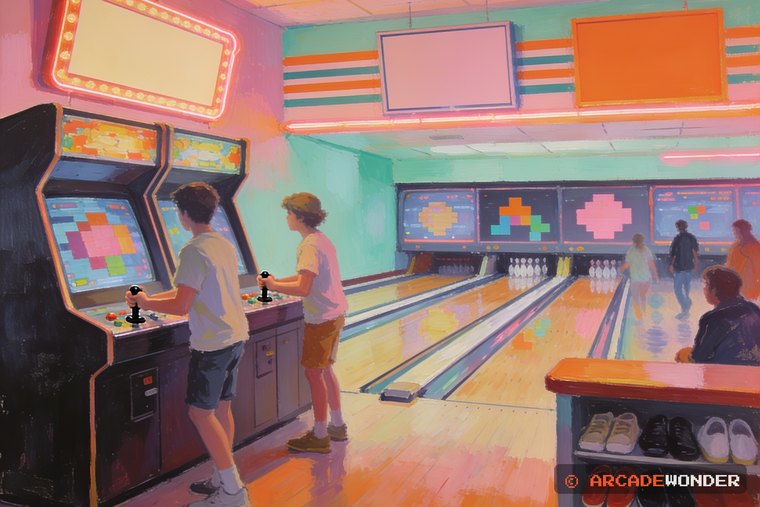
In American arcades Smash TV was the loud corner. It had two sets of sticks on one wide panel, and it drew pairs: brothers at the mall, two friends at the pizza place splitting a pocket of quarters, strangers teaming up at the bowling alley because the game was too hard alone. You would hear the host yelling from the parking lot door, and you would walk over to see who was still alive.
Playing it now
Nothing about it has aged in the hands. Twin-stick shooting still feels as good as it did, and the arena design still forces clean decisions about space. Bring a friend, agree on the toaster rules, and enjoy one of the most honest two-player games Williams ever built.
Were you the player who shared, or the one who grabbed every toaster?