Samurai Shodown review: one clean cut beats ten combos

The verdict: a tense, patient sword fighter that rewards reading your opponent over memorizing inputs, and it still feels unlike anything else from its era.
- Made by
- SNK, designed by Yasushi Adachi
- Released
- Japan and North America, July 1993
- Genre
- Weapon-based fighting
Two fighters face each other with swords drawn. A referee stands between them holding two flags. Nobody moves for a moment, and in a noisy arcade, that moment of stillness felt louder than anything else in the room.
A game about the single hit
Samurai Shodown takes place in feudal-era Japan, and every fighter carries a weapon. That changes the math of a fighting game completely. It focuses on quick, powerful strikes instead of long combos, and a heavy slash that connects can take a frightening chunk of the life bar. When a hard hit lands, the action drops into slow motion, and the whole crowd leans in.
So the game rewards patience. Swing wildly and a good opponent steps back and punishes the miss. Wait, read the other player, and strike once, and you look like a master. The camera zoom, a refined version of the one first found in Art of Fighting, pulls in close when fighters meet and out when they separate, so the distance between two players is always something you can feel.
Other fighting games taught you to keep pressing. This one taught you to wait.
Little chaos around the edges
The referee raises a flag for whoever lands a hit, which makes every exchange feel like an actual duel. And every so often a delivery man runs through the background and throws items into the fight, sometimes bombs and sometimes health-restoring chicken. It can swing a close round, and it kept the seriousness from ever getting stiff. The music uses traditional instruments such as the shakuhachi and shamisen, which made it sound unlike every other cabinet nearby.
Samurai Shodown was developed and published by SNK for the Neo Geo, with Yasushi Adachi as series creator and director. It came out in Japan and North America in July 1993. It was SNK's first arcade fighting game to focus primarily on weapon-based combat, and it was one of America's top five highest-grossing arcade conversion kits of 1994.
Source: Samurai Shodown (1993 video game) · Wikipedia (checked September 14, 2026)
A cast built for the world
The roster is mostly Japanese swordsmen and ninjas, but it also has Earthquake, a large Texan thief, and Galford, an American who went to Japan to become a ninja. Even the name reflects the U.S. market: the spelling "Shodown" came from SNK's U.S. distributor.
What it meant back then
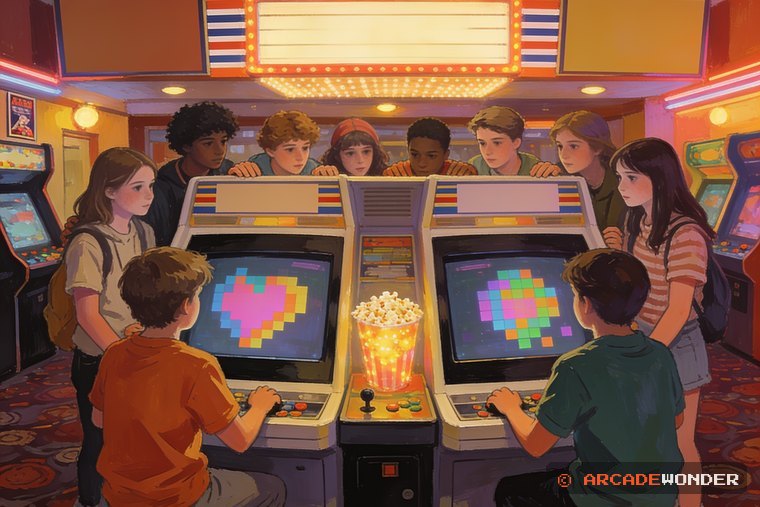
In the United States Samurai Shodown was one of America's top five highest-grossing arcade conversion kits of 1994, which meant it lived inside the red Neo Geo cabinets you found everywhere: the mall arcade, the pizza place, the movie theater lobby, the bowling alley. It was often one game among several on the same machine, and it was the one that drew a crowd. For players worn out on memorizing combos, it felt like a breath of fresh air with a sharp edge.
Playing it now
It is still one of the purest fighting games ever made. Learn the range of your weapon, stop pressing buttons out of nerves, and wait for the opening. The first time a single slash wins you a round, the whole design makes sense.
Who was your fighter, and did you ever beat a friend with a single perfect slash?