Rolling Thunder review: the spy game that taught you to wait behind a door
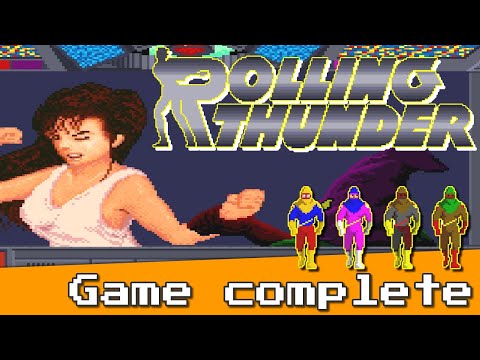
The verdict: a cool, deliberate action game that punishes rushing and rewards nerve, and whose ideas still show up in games today.
- Made by
- Namco; released in North America by Atari Games
- Released
- Japan, December 1986; North America, February 1987
- Genre
- Run and gun
A secret agent walks down a hallway with a pistol. Hooded soldiers step out of doorways. There are crates to jump, railings to leap, and doors with "bullets" painted on them. He can take a couple of punches, but one bullet ends him. Rolling Thunder looks like a cool spy movie. It plays like a careful one.
Doors are the best weapon
The design centers on cover. The player can enter doors to hide and take cover from enemies, and crates and obstacles block enemy fire. That was not how arcade action games usually worked. Standing still behind cover while enemies walk into your line of fire is the smartest thing you can do, and the game is built so that charging ahead gets you killed.
That idea travelled. Rolling Thunder influenced later franchises like Shinobi and Time Crisis, which borrowed mechanics such as taking cover behind crates. When you duck behind a wall in a shooter today, you are doing something this game made feel natural.
Rolling Thunder was the arcade game that taught you to wait.
Counting every bullet
The other half of the tension is ammunition. You start with a pistol, you find ammunition by entering doors, and if you run completely dry you are left with one slow shot at a time. So every door is a decision. Duck in to hide, or duck in hoping for bullets, while a Masker walks toward you.
The damage rules are harsh. The player can take only two physical hits, and he is killed instantly by a projectile. The main enemies are hooded soldiers called Maskers, and their colors tell you how they fight. Learning to read those colors is the difference between clearing a floor and restarting it.
Rolling Thunder was developed and published by Namco for arcades and released by Atari Games in North America. It came out in Japan in December 1986 and in North America in February 1987. The player controls a secret agent who must rescue his female partner from a terrorist organization, and the game influenced later franchises such as Shinobi and Time Crisis, which borrowed mechanics like taking cover behind crates.
Source: Rolling Thunder (video game) · Wikipedia (checked September 14, 2026)
Style to spare
You play Albatross, an agent sent to save his partner Leila Blitz from a secret society called Geldra based in New York. The music by Junko Ozawa is moody and cool, and the whole thing has the feel of a spy show on late-night television, all hallways, doorways and slow tension.
What it meant back then
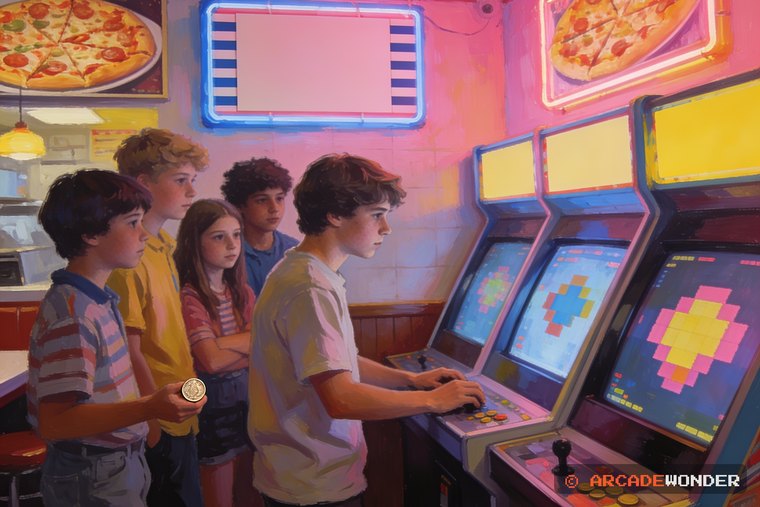
Atari Games brought it to North America, and by the late eighties the American arcade had changed. The golden age crowds were thinner, and the machines that held attention were the ones with style. Rolling Thunder was one of those, tucked into a mall arcade or a pizza place, and the kid who could get past the first few floors on one quarter looked like a genuine professional.
Playing it today
It is slower and more deliberate than most action games from its time, and that is why it still feels fresh. Play it like a shooter and it will crush you. Play it like a spy, patiently and from doorways, and it becomes one of the most satisfying arcade games of the late eighties.
Were you a door hider or a charger, and how fast did the Maskers cure you of charging?