Pac-Man review: the maze everyone was allowed to lose
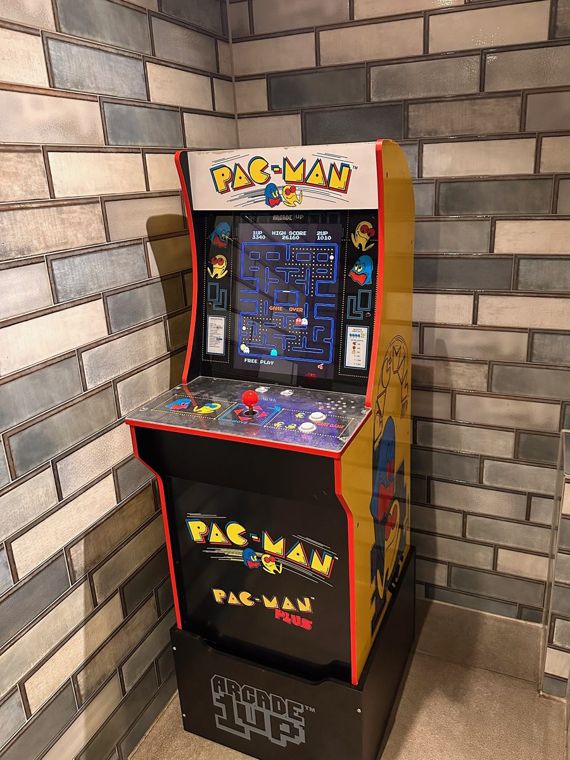
The verdict: the rare arcade game that let you be bad at it in public, which is exactly why it outlived the room it stood in.
- Made by
- Namco, designed by Toru Iwatani
- Released
- Japan, May 1980 (wider release that July); North America, October 1980 via Midway
- Genre
- Maze chase
A circle eats dots. Four ghosts chase it. One pill turns the chase around. You can teach the whole game in a sentence, which almost no other machine on that floor could claim. Most of them needed a paragraph, and by the time you finished the paragraph the kid behind you wanted his turn.
It let you stay on the screen
Walk into an arcade of that era and half the cabinets would end your first life in seconds. Pac-Man did not. You could move, eat a few dots, get cornered, and still last long enough to work out what the game wanted. That is a design decision, not a weakness.
The ghosts help with this. They do not swarm as a single wall; they take different lines, so a beginner keeps finding gaps. The game feels generous for a minute and then stops being generous, and by the time you notice, you are the person standing at the machine with a crowd behind you.
A game people were allowed to be bad at is the game everyone remembers.
The power pill is the whole pitch
For a few seconds the thing hunting you becomes the thing running away. Nothing else in those rooms gave a ten year old that feeling, and nothing else was so easy to describe at the dinner table. The mechanic travelled further than the machine did: onto lunch boxes, onto television, into conversations between people who never touched a joystick.
Pac-Man was made at Namco, conceived by Toru Iwatani, and first put in front of players in Japan in May 1980, with a wider release that July. Midway released it in North America in October of the same year.
Source: Pac-Man · Wikipedia (checked September 12, 2026)
What it meant back then
American arcades were not neighborhood rooms. They were in malls, in pizza places, in the corner of a bowling alley, and the machine you could play was the one your quarter reached. Pac-Man sat where everyone walked past, which is part of why it became the shared memory rather than the better game two cabinets over.
Playing it today
It holds up because it never asked for much: no story, no tutorial, no second button. Show it to a child and they will explain the rules back to you on the second try. If you want to see what a game looks like when nothing is wasted, this is still the example.
What was the first arcade game you were any good at?