Operation Wolf review: the mounted Uzi that kicked back
The verdict: a physical, noisy war cabinet with a surprisingly strict economy of ammunition, and the gun still feels like the best part of the machine.
- Made by
- Taito
- Released
- Japan and Europe, October 1987; North America, December 1987
- Genre
- Light gun shooter
The gun sits on a swivel at the front of the cabinet, black and heavy, shaped like an Uzi. You grab it, pull the trigger, and it rattles against your hands. Before you have even read the screen, the machine has already made its case.
A gun that pushes back
The controller is an optical gun resembling an Uzi submachine gun, it swivels and tilts, and it vibrates to simulate recoil. That shaking changes how you aim. You cannot hold a perfect line while it kicks, so you learn short bursts that keep the sight where you want it. Pull the trigger for fully automatic fire, and press the button near the muzzle to launch a grenade.
The view is first-person, scrolling horizontally from the jungle toward the enemy camp, while soldiers, trucks, boats and helicopters cross in front of you. An on-screen counter shows how many you still need to hit before the stage ends. So it is not just survival. You are working through a quota.
The gun shook in your hands, and that was the whole sales pitch.
Never quite enough bullets
Here is where it gets smart. Ammunition is limited, and so are grenades. You refill by shooting objects in the scenery, which means your eyes are always split between the soldier aiming at you and the supply crate drifting past behind him. Waste a magazine in a panic and you will be clicking on empty when the helicopter arrives. Incoming grenades and rockets can be shot out of the air, which rewards the player who stays calm and picks targets.
It also punishes carelessness. Shooting nurses and boys who run across the screen damages you, and hitting dynamite hurts every target on the screen, enemy and friendly. The gun wants you to fire. The game wants you to think first.
Operation Wolf was developed and published by Taito for arcades. It came out in Japan and Europe in October 1987 and in North America in December 1987. The cabinet uses an optical controller resembling an Uzi submachine gun that vibrates to simulate recoil, and in the United States it was one of the top five highest-grossing dedicated arcade games of 1988.
Source: Operation Wolf · Wikipedia (checked September 14, 2026)
The mission
You play Roy Adams, sent to rescue five hostages from enemy territory, and each stage moves that story forward, from the jungle to the camp where the prisoners are held. It is simple, action movie stuff, but it gave the shooting a direction and made the last stage feel earned.
What it meant back then
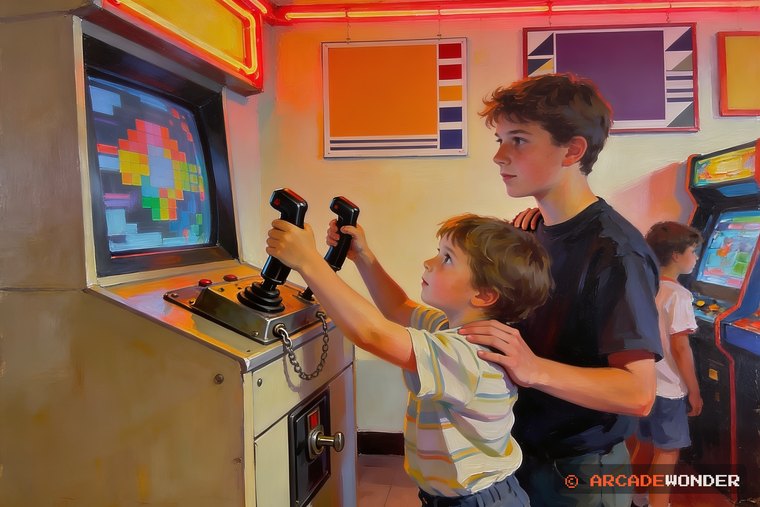
In the United States it was one of the top five highest-grossing dedicated arcade games of 1988, and it looked like it. The cabinet stood near the entrance at the mall arcade and the bowling alley, the gun catching light, and kids who could barely see over the panel still grabbed it just to feel it shake. It was the year of action heroes on every video store wall, and this was a way to hold one.
Playing it now
Nothing replaces the mounted, rattling gun, and that is the honest truth about this game. But the design underneath still works: fire in bursts, shoot the supplies, pick off the grenades, and never waste the last magazine. Find the real cabinet if you can.
Did you save the grenades, or fire them the second a helicopter showed up?