Mortal Kombat review: the fighting game that looked like a movie

The verdict: rougher than its rivals as a fighting game, and far bolder as a spectacle, which is exactly why a whole country remembers it.
- Made by
- Midway; designed by Ed Boon and John Tobias
- Released
- Arcade, August 1992
- Genre
- Fighting
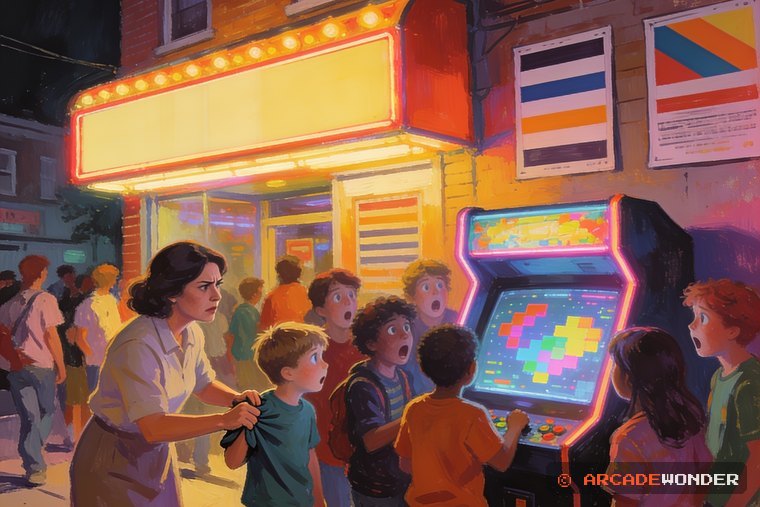
The fight is over. The loser is swaying on his feet. The winner has one more chance to do something, and every kid standing behind the cabinet leans in at once.
Why did it look so different?
Mortal Kombat was developed with digitized sprites based on real actors, and that one decision set it apart from everything else in the room. The other fighting games were drawings. This one looked like footage from a low budget martial arts movie playing on a television, and in the early nineties that read as shockingly real.
Ed Boon and John Tobias also built a different set of controls. The five-button control scheme includes a dedicated block button, so you defend by pressing something instead of pulling away. Blocking still takes a small amount of damage, but you give up almost no ground, which makes the counterattack the heart of every fight.
Some games are remembered for how they play. This one is remembered for what happened after you won.
The uppercut and the finish
The shared moves are simple and brutal. The uppercut knocks your opponent high into the air, and the game introduced juggling, hitting someone again while they are still airborne. It rewards reading the fight more than memorizing long sequences.
And then there is the Fatality, a finishing move performed on a defeated opponent. It had nothing to do with winning, and it was the reason people crowded the machine. Learning one was secret knowledge, passed along from kid to kid, often wrong. Between fights, Test Your Might asked you to break blocks by pressing buttons as fast as you could, and in the single-player game Goro and then Shang Tsung waited at the end.
Mortal Kombat is a fighting game developed and published by Midway for arcades, released in August 1992 and designed by Ed Boon and John Tobias. It introduced a five-button control scheme and gory finishing moves called Fatalities, used digitized sprites based on real actors, and, along with other games, prompted the formation of the ESRB.
Source: Mortal Kombat (1992 video game) · Wikipedia (checked September 14, 2026)
What it meant back then
In American arcades, Mortal Kombat was the cabinet with the crowd that sounded different: louder, younger, more shocked. You found it at the mall, the bowling alley and the pizza place, and the rumor mill around it was half the game. Parents noticed too. Its violence sparked a lot of controversy, and along with games like Night Trap it prompted the formation of the ESRB, the ratings on every game box that followed. Few arcade games ever changed the rules outside the arcade.
Playing it today
As a fighting game it is stiffer than its rivals, and the computer opponents can be cheap. As a piece of arcade history it is irreplaceable. Play a few rounds, learn one finishing move, and remember how much it once meant to know the button sequence.
Where did you first see someone pull off a Fatality, and did you believe it?