Mortal Kombat II review: faster, bigger, and a little bit funny
The verdict: the sequel that fixed the fighting and found a sense of humor, and still the best place to meet the series.
- Made by
- Midway; designed by Ed Boon and John Tobias
- Released
- Arcade, North America, November 1993
- Genre
- Fighting
Two fighters trade blows faster than anyone expected. One goes down. The winner walks over, taps out a secret code, and instead of something horrible, the loser turns into a crying baby. The whole crowd behind the cabinet cracks up.
What did the sequel actually fix?
Mortal Kombat II improved the fighting in ways you feel in the first round. A crouching punch was added, roundhouse kicks became more powerful, and reduced recovery times made combos easier to string together. Most of all, the game plays almost twice as fast as the original. The stiffness people complained about in the first game is mostly gone, and what is left is a fighter that rewards aggression.
Ed Boon and John Tobias also dropped the Test Your Might bonus games and replaced them with a consecutive win tally, which is a small change that says a lot. The sequel knew its players were there to fight each other, not to break boards.
The best sequels do not just add more. They understand what people loved and cut everything in the way.
Finishing moves with a sense of humor
The first game had one Fatality per character. This one introduced multiple Fatalities, stage Fatalities that use the arena itself, and two non-lethal finishers. A Babality turns your opponent into a crying baby. A Friendship is a gesture of goodwill, like dancing or giving a gift. After all the fuss about the first game, the designers answered by making the finishing move a joke you could play on a friend.
The cast grew too, with Kitana, Mileena and Kung Lao, a tournament moved to Outworld, and Shao Kahn waiting at the top.
Mortal Kombat II is a fighting game developed and published by Midway for arcades, released in North America in November 1993. It improved the gameplay of the first game, plays almost twice as fast, and introduced multiple Fatalities per character along with non-lethal finishers called Babalities and Friendships. It was an enormous commercial success.
Source: Mortal Kombat II · Wikipedia (checked September 14, 2026)
What it meant back then
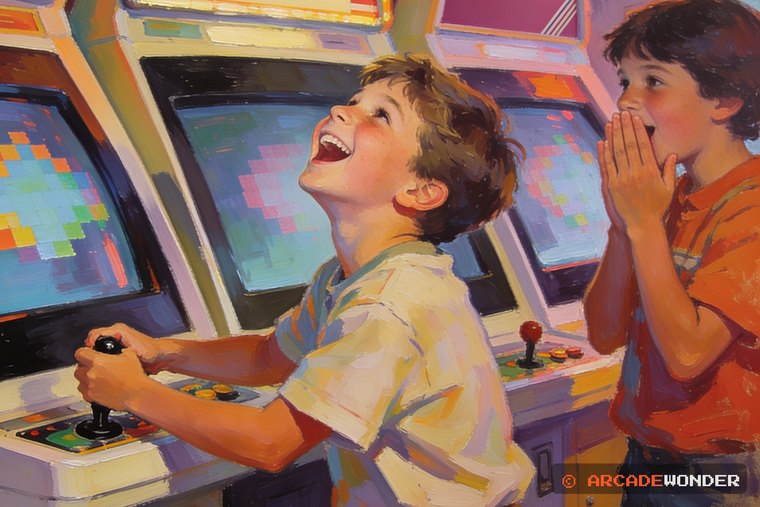
In American arcades in the winter of 1993 and after, this was the machine. It was released to enormous commercial success, and every mall arcade, bowling alley and convenience store with a spare corner seemed to have one. The secret codes for Friendships and Babalities spread through schoolyards, magazines and older brothers, and half of them were made up. It drew controversy for its violence like the first game did, but the kids crowding around it mostly remember laughing.
Playing it today
It is the best entry point to the series: fast, varied and readable. Pick a character, learn one special move and one finisher, and try the Friendship first. It is still the most satisfying way to end a fight with someone you know.
Did you ever pull off a Babality on a friend, and did he ever forgive you?